After taking players to Roman Britain, Matthew Konkoly chose a radically different setting. Warlord: Awaji (here is our review), the second game in the series developed by Darkmatter Games, is set in fourteenth-century Japan and puts us in command of an army seeking to conquer Awaji Island. We explore the world in first person, lead our troops on the battlefield, and decide how to deal with the island’s inhabitants: through trade and negotiation, or by force. It is the formula Konkoly calls “immersive strategy,” where a commander’s decisions have strategic consequences but are experienced from the perspective of someone physically present in the game world.
Moving from a Roman army to the warriors of medieval Japan required far more than a change of scenery. Konkoly studied the period, worked with a historian, and visited Awaji to recreate its landscape and some of its real-life locations. He also redesigned progression and army composition, aiming to give the second Warlord a distinct identity that reflected the history he wanted to portray. We interviewed Matthew about that journey: from his first steps in game development to the design choices behind Awaji, the technical challenges that emerged after launch, and the freedom the game gives players to follow their own moral code as they pursue conquest.
Our conversation also explores the more personal side of the project: what it means to make a game of this scale as the only full-time developer, with the help of a small group of collaborators and no publisher behind him. Here is our chat with the developer, Matthew Konkoly. For friends who don’t speak English, here is the Italian version of Our interview. Enjoy the reading.
Introduce yourself to the Italian public. Tell us: how your journey into game development began? Your background combines Computer Science and Roman History: how have these two fields influenced the kind of games you create?
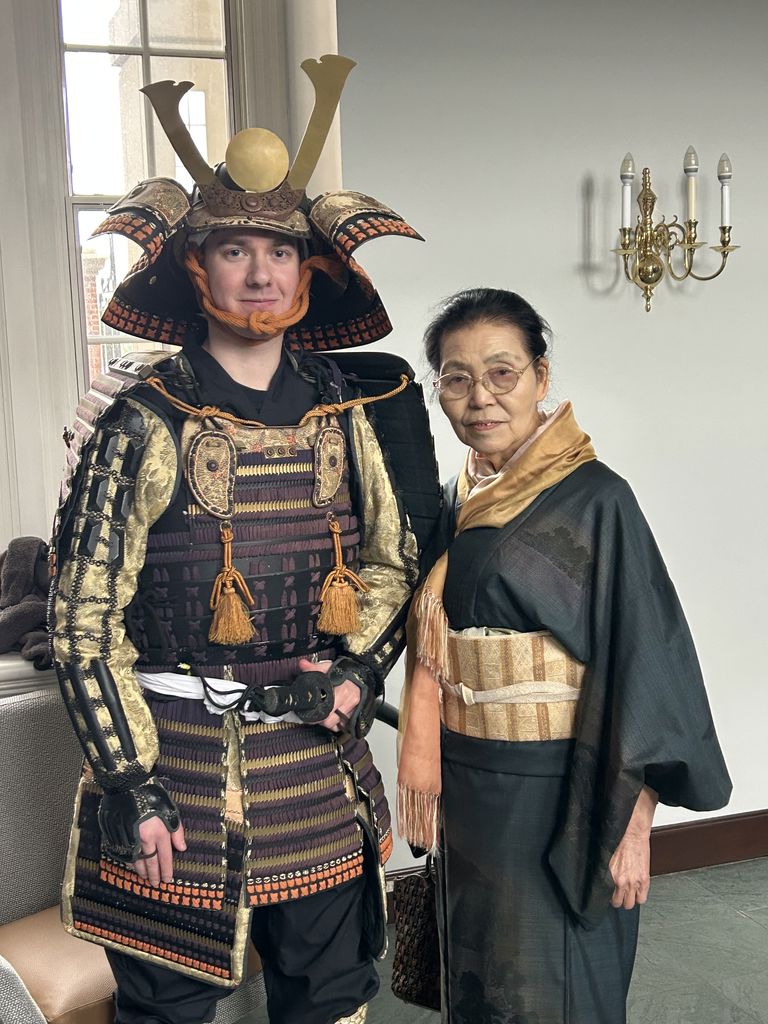
My name is Matthew Konkoly, I am 26 and live in Indiana, USA. I am an American of partial Italian heritage, on my mom’s side. I am fond of traveling and food. I started game development when I was in middle school, using a kid-oriented website called Scratch. I published a number of simple games on that platform. By the time I got to high school I graduated from Scratch and dived into 3D graphics with the Unity Engine, which is still my engine of choice. My degree was in computer science, with a focus on software development, mainly using C and x86 Assembly.
It was very basic, we didn’t even use IDEs, which are like word processors for code. It was all in the command terminal. This gave me a “figure it out” mentality which I believe actively helps my self-taught game development endeavors. While I was at school I became deeply interested in history, and pursued a minor in Classics. This immersed me in Roman history and helped strengthen the historical authenticity of Warlord: Britannia, my first big game, which I started actually just before entering college. This rigorous period of study strengthened my ability to research new topics.
Darkmatter Games (You) describes Warlord as an “immersive strategy” series. What does that term mean to you, and what can a first-person perspective offer that a traditional strategy game viewed from above cannot?
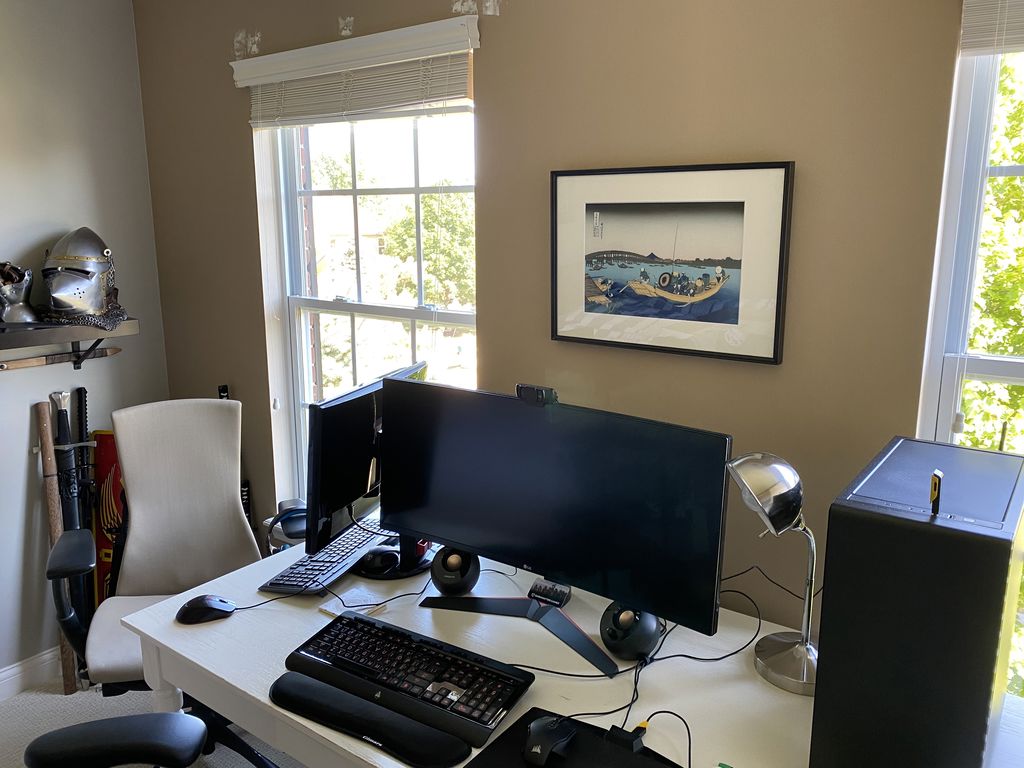
“Immersive strategy” is a novel term I coined when I published Warlord: Britannia to describe its totally unique mix of genres. The whole point of immersive strategy and Warlord (the first franchise to utilize this new genre) is to fully immerse the player in the role of a historical figure and give them real responsibilities and a physical presence on the battlefield. You become a true “field commander.” I found that games are either immersive, or strategic, but never both. For example, my favorite example of “immersive” would be Kingdom: Come Deliverance. A great example of “strategic” would be Total War: Shogun 2. The Mount & Blade series comes close to immersive strategy, but its disembodied world map clearly disqualifies it.
In that game you spend much more time in menu screens and maps than you do physically controlling your character in the real game world. Warlord is truly unique in the sense that you remain in your character’s perspective both physically and temporally for the entire duration of the game, while being presented with strategic elements like leading dozens to hundreds of troops into battle, dealing with neutral and hostile factions, and creating intricate camps anywhere in a massive open world. As far as I know, this combination only exists in Warlord.
After depicting the Roman conquest of Britain in Warlord: Britannia, why did you choose fourteenth-century Japan (and Awaji Island in particular) as the setting for the second game?
Although I have a serious background in Roman history, I have many interests. I have been deeply immersed and interested in Japanese history since around 2020. So I knew I wanted to take this Warlord concept to Japan long before Warlord: Britannia even released. Picking the exact time and place was not easy. I went through a few ideas before settling on the 1300s. I wanted to show “classical” Japanese warfare, as opposed to the warring-states period which became heavily influenced by Western firearms and centered around levy pike tactics.
The 1300s provide what my Discord members lovingly call “a bit of this and a bit of that ahh tactics.” Where fancy warriors lead small bands of their retainers into battle, nothing is standardized or regulated, and tactics basically don’t exist. This was a massive departure from the rigid formations of the Romans, so I am not surprised that some Britannia players did not connect with Awaji. If Warlord: Awaji played and felt the same as Britannia, I would have failed miserably in my job of recreating history! This period also allowed some liberty with end-game gunpowder weapons. Britannia had powerful siege weapons, including what players called “tactical nuclear ballistae,” so I knew I needed to up the ante with the gun and bombs in Awaji.
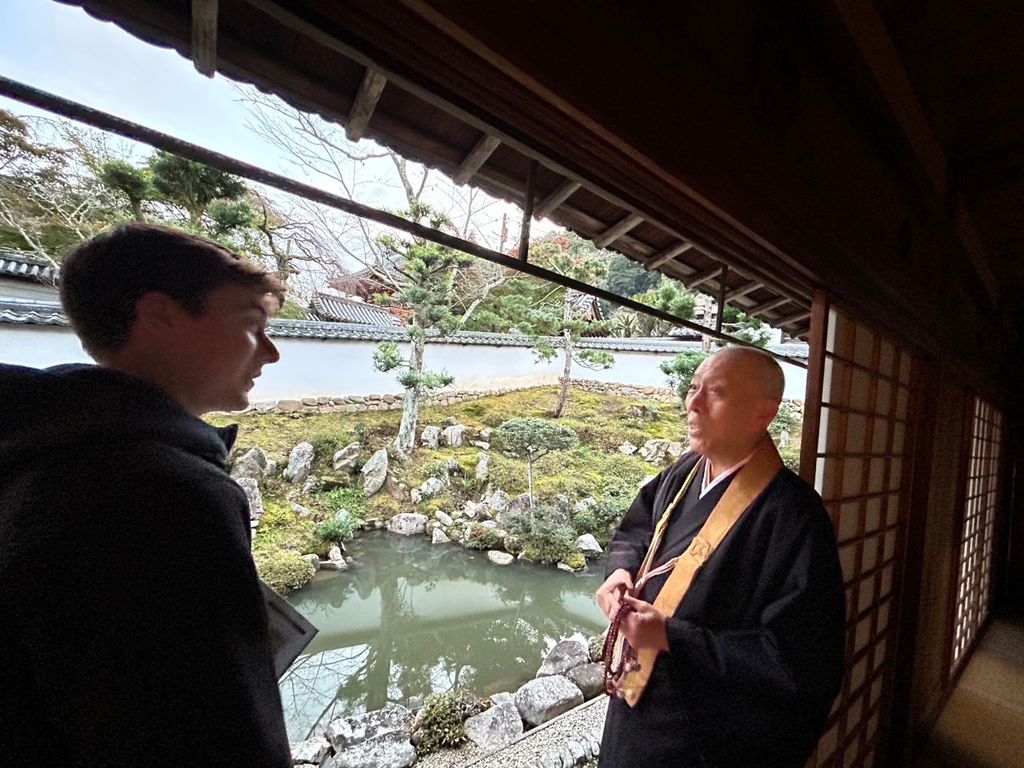
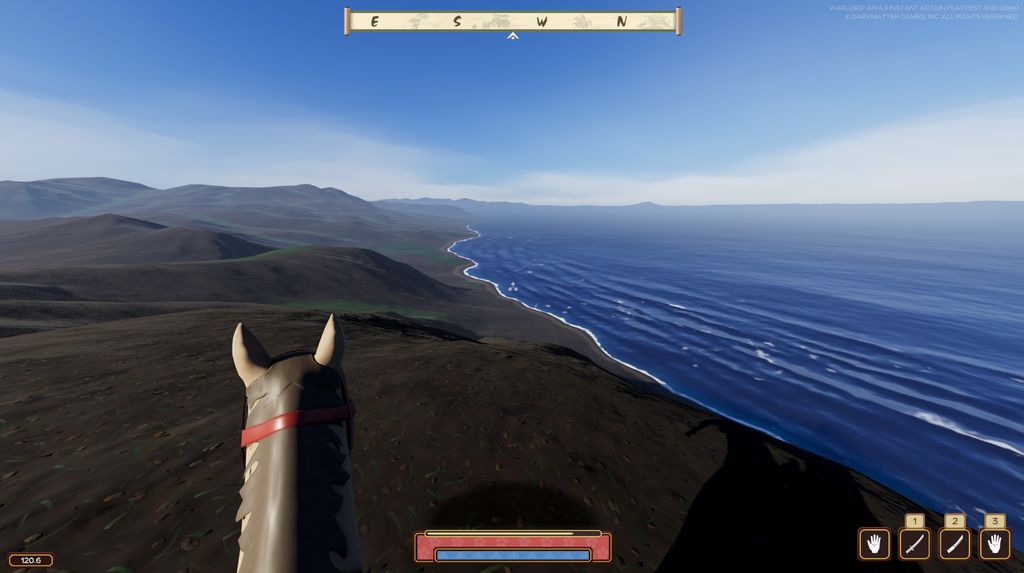
I think I succeeded in this, as many players reported being scarred by their first encounter with gunpowder weapons. The weapons I chose were historically plausible, and they only appear in the end game, so authenticity was preserved nicely. I chose Awaji island because of its geography. It is situated in the perfect place to wrap it into the larger story of 1300s Japan, and its varied and interesting terrain made it the perfect island to conquer. I have visited Awaji in real life and tried my best to capture its natural beauty and sightlines.
Historical authenticity appears to be one of the foundations of the Warlord series. What sources and specialists did you consult while developing Awaji, and did your research challenge any widespread misconceptions about samurai warfare?
I have a collection of English and Japanese history books that I used as reference material. This is part of the reason I became fluent and literate in Japanese. I needed to read Japanese sources and understand vocabulary without fully relying on translations, which always have some biases and can disturb the nuances of the original. I was accustomed to doing this with Roman sources (since I had some Latin background), but Japanese was all Greek to me at first. As I touched on in the last section, Warlord: Awaji depicts “classical” samurai warfare, long before the much more popular warring-states period. People often consider this period boring, but I think that is due to them simply overlooking it and skipping to the “good part”.
So I wanted to show that the 1300s can be just as interesting and possibly even more dynamic than later periods. I worked with world-renowned scholar and expert, Thomas Conlan, when developing this game. He helped me understand the real soul of this period, and how chaotic and interesting it was. If he had it his way, your retainers might take the head of a famous warrior, cash it in at your camp, and just go home! Or they might grab a nearby civilian and try to pass their head off as something of value. We had many interesting conversations like this that would have left an external observer confused and potentially concerned.
You recreated the island using real heightmap data and also travelled to Japan for research. How did you balance geographical and historical accuracy with the practical needs of an open-world video game?
The open world terrain of Awaji is virtually unchanged from its real life counterpart, topography wise. I had to scale down the island a bit, to ⅓ scale, otherwise it would have been way too large for the amount of content I could create, but this preserved all of the mountains, hills, valleys, plains, and beaches exactly how they are. I was also able to place over 30 temples and 20 shrines from real life moreless right where they should be, most even with accurate orientations, and all tagged with their real name. I visited many of them in real life too. My goal was to create a 30-40 hour campaign with varied terrain and increasingly advanced regions. Awaji presented a perfect geographic setup for this. The northern part of the island where you start is very rural and rugged, but it opens up and flattens out the further south you go, which supports larger, more developed populations.
Warlord: Awaji was developed over approximately three years, with you as its only full-time developer and with support from a very small group of contractors. Which parts of the game did you create personally, what work did you entrust to your collaborators, and which aspect of development proved the most difficult?
I find that often players assume this game was created by a much larger team than it really was, and they are shocked to learn I am the only person maintaining it when they inevitably speak to me with their bug reports. This is partially my fault for not leaning into the “solo-dev” marketing tactic, despite the fact that I truly am the only full time developer working at Darkmatter Games. The reason I avoid labelling myself as a “solo-dev” is that in my opinion, it would be disrespectful to the many people who helped make this game a reality. I work with an erudite AAA sound designer named Jack Menhorn. He was responsible for all of the sound effects in the game.
Joshua Lamberti is the game’s composer, and singlehandedly created all of its amazing music. Without these two individuals the game would lack that final layer of bespoke polish. I also contracted help with the character animations. Animations are something I technically can do myself, but my animations are extremely basic and lack sophistication. Some other 2D elements were also contracted out, like the game’s marketing key art and the in-game map background. Everything else in the game was created by me from scratch.
What were the most important lessons you learned from Warlord: Britannia? When beginning Awaji, which elements did you know you wanted to preserve, and which systems did you deliberately redesign or leave behind?
The main limitation Britannia had in my mind was its progression and economy. I have no formal training in game development, so I was making things up as I went along. The issue with Britannia’s gameplay was that you could max out your army in the starter region simply by waiting and collecting taxes. I wanted Awaji to be 100% player action driven. Gaining more resources should always be something you actively set out to do. Holing up at camp and waiting should neither harm you nor help you. The way I solved this issue was by changing the economy of the game so it is fixed at world creation.
Warlord: Awaji has a fixed number of items and they are neither created nor destroyed, just moved around. This allowed me to easily control the progression of the player’s army as they expanded across the map. I really like how this system turned out. I also focused heavily on player freedom and army customization in this game, to suit the new setting. The Roman army had a predetermined composition, but this new medieval Japanese army is fully modular. I achieved this by using the new item system for weapon and armor upgrades, as well as a novel army window with intuitive drag and drop controls.
Warlord: Awaji features 20 different settlement types across the island. From a design perspective, what distinguishes them beyond their visual appearance, and how are their layouts, garrisons and functions intended to encourage different tactical approaches?
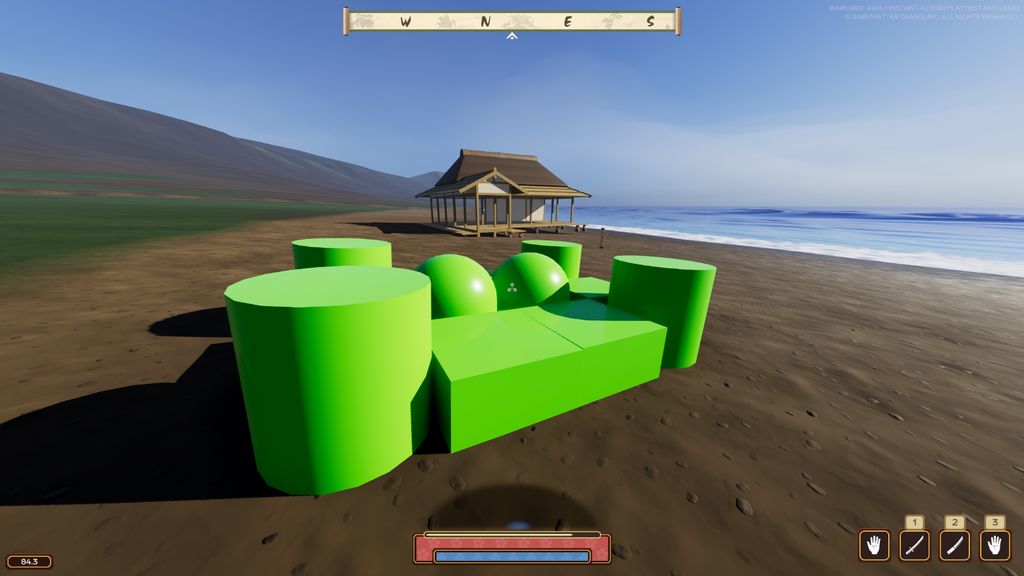
As the player explores the island and heads further south, they encounter more advanced and larger settlement types. There are three categories of settlements: civilian, religious, and military. Civilian settlements do not change too much in terms of design aside from becoming physically larger with stronger militia garrisons (the observant player will notice how militiamen in civilian settlements are not actually samurai warriors at all). The villages and markets in the later regions are supposed to show to the player how the civilian population of southern Awaji is much more developed, and supports more powerful warrior and monk factions. The religious settlements become larger and more wealthy the further south you venture. Unlike temples, Buddhist monasteries have walls and only one entrance, which creates a chokepoint. My idea with these was a little sinister…
Since the player starts neutral to the monks, the evil player may bring most of their army inside the walls, then declare war on the faction and wipe everyone out. Players actually ended up doing this, so I was pretty excited to see that. The grand shrines and shrines in general are designed to be a break from combat and let the player soak in the natural beauty of Shintoism. Awaji contains one of Japan’s most storied shrines, Izanagi-jingu, which is recreated in the game. The military settlements are where the design changes the most as you progress in the game. The early checkpoints and mansions are small enough that they can be quickly overrun by your forces, but the later outposts, estates, and forts are designed to force the player into making risky moves. They are walled and have archer towers, so you will be taking arrow fire before even entering, then once you enter, they are filled with high tier defenders.
Estates and forts in particular are loaded with enemy gokenin and their retainers. The other big design change in the later regions is how the settlements are connected to form defense networks. On the map there are red lines drawn between settlements. These show patrol and raid lines, which the player can trigger by approaching or fighting the settlement. In early regions I deliberately left these minimal, but in the end game zones they are about as tightly coupled as I could make them. This adds another layer of strategy where the player can try to take out the parent settlement first, then the child, in order to avoid triggering raids. Or the player can abuse this system to “raid stack” and kite around a massive enemy army just for the fun of it. I never intended for players to do that, but it was very fun to watch.
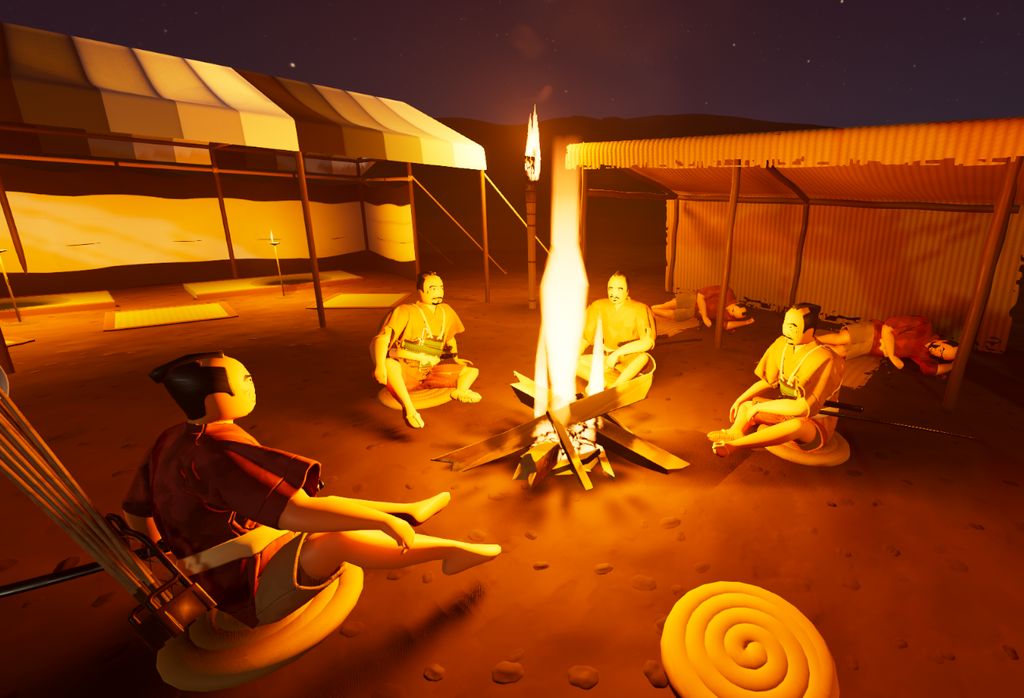
For a project developed by such a small team, pre-release testing inevitably has certain limitations. Once the game reached a much wider audience on Steam, did players uncover problems or adopt strategies that you had not anticipated? How do you decide which feedback requires an immediate change and which suggestions might conflict with your original creative vision?
This was a huge issue with both Warlord: Britannia and Awaji. I am the only developer, so almost all of my time is spent creating the game. I had very little time to extensively test the game. Before launch, Warlord: Awaji had only 10-15 people try it out, most for only a few hours. Only 2 people beat the full game before it launched on Steam to thousands of players! Overall players experienced the game how I had anticipated. One big issue I recognized quickly was that players simply didn’t know how much content the game had. At first I had the locked weapons, armors, and settlements hidden completely, not just greyed out. I had people saying that once you conquer 3 settlements, you have seen all of the content in the game…
This was definitely true for Britannia, but not for Awaji, so I quickly changed the interface to show players what to look forward to. There were also some issues with the pacing of the game being too slow in the starter region. Testers had patience but fresh players often did not. So I was able to quickly move up some better weapons and armors into the starter region and that seemed to keep people happy. Another big feature I figured everyone would use was the trading system. When the game first launched however there was no real way to discover trading aside from getting lucky and hovering your mouse over a temple on the map!
I quickly noticed that players were just wiping out temples and not trading with them at all. So I had to fix this right away and it seems like people are enjoying the trading system now. I identified some frustrating bugs, soft locks, imbalances, and conspicuous glitches very quickly and was able to fix them within about a week after launch. Warlord: Awaji had vastly less bugs and issues than Britannia did at launch, so that was nice. I am still combing through feedback to find more things I can act on. My goal is to make the game as seamless and performant to play as possible without adding any new content yet.
The first major performance update identified tree colliders as an unexpectedly significant source of problems. Could you explain how you discovered this bottleneck and what that experience reveals about optimizing a large open-world simulation as a small independent developer?
This was an issue that Britannia dodged purely by luck. The Unity Engine ships with a terrain system which, when paired with some external tools, can be very good for open world games. However, there are gotchas and nuances that are very hard to find and no one talks about online (probably because the number of people making open world games like this is extremely small). I always assumed the physics overhead I was seeing was due to the new character models. Britannia’s characters didn’t have arms or legs, so of course it would run a little slower, right? Well it turned out all of that physics overhead was actually not coming from the characters at all, it was the trees!
I did some extensive profiling of the game and tested a number of scenarios. Lots of units, no units, lots of trees, no trees, etc. I came to the conclusion that the tree colliders, which I thought were combined with the static terrain collider at runtime, were actually all just individual colliders active across the entire world (gotcha!). This caused the physics broadphase sweep for colliders to be extremely slow. Removing their colliders virtually eliminated physics overhead. Players report double the framerate in certain cases, no more micro stuttering, and a drastically faster load time.
This is how the game should have run from the start, so now I can look into other possible optimizations. It is no wonder that open world games are typically reserved for massive AA and AAA studios. Getting them to run well is a huge technical challenge, even when working with a prebuilt engine. Warlord: Awaji runs many independent systems to optimize settlements, lights, characters, sounds, physics, effects, projectiles, and more, and it all happens behind the scenes without the player noticing. None of this is stock in the Unity Engine and was built up gradually over the past three years. Hopefully I can reuse some of it for the next game.
Awaji allows players to trade, negotiate, take prisoners, demand tribute or raze settlements while acting as the leader of an invading army. Did you want players to reflect on the moral consequences of conquest, or is the game primarily intended as a military and strategic sandbox?
This is a very interesting question and I am glad you asked it. I am keenly aware of the moral grey zone that this game inhabits, and I actively try to give players options so that they can act out whichever alignment they want to portray. I have some players for example who refuse to harm the neutral monks or hurt any civilians, even going as far as to limit ranged weapon use, which can cause collateral damage. On the other hand, some players go on the warpath and lay waste to Awaji and its inhabitants. Most players probably fall somewhere in the middle, due to their inherent sense of human morality, but competing desire to attain resources and land.
My goal with this game was to provide the player with a panoply of options and not directly suggest that any option is better or more moral than any other. This allows the player to create their own moral code to follow in the game. So far it seems like this has succeeded since I often hear about players reflecting on their choices in the game and creating guidelines for themselves. Unlike Britannia, Awaji in general has a different tone which I will try to explain here. I am a massive fan of Umberto Eco (I have read almost all of his books 2-3 times each. Rest in peace). In one of his wonderful books, The Island of the Day Before, the main character takes part in the Siege of Casale in the late medieval/early renaissance. In this period, warfare was not as lethal as later eras or antiquity.
Battles had casualties and deaths, but massive routs were rare, and things often ended in awkward stalemates. I remember a quote in the book describing warfare “as an adventure” where “some people might die, but it won’t be me.” I found this almost nonchalant idea of warfare refreshing and wanted to allow this to a degree in Awaji. Unlike Britannia, where battles end in one side being killed outright, in Warlord: Awaji there are casualties and people can surrender and be allowed to live. This allows the player to act out this idea of warfare as an adventure, where you fight your adversaries and defeat them, but do not hate them or create unnecessary destruction. I hope to expand on this idea (and more from Eco’s amazing works) in the future.
You have mentioned a future Museum Mode and further research in Japan. What do you envision for this mode, and how far would you like the educational and historical side of Warlord: Awaji to develop?
Warlord: Britannia shipped with a museum, so naturally I had planned to add one in Awaji, but Darkmatter Games’ financial situation over the summer made it so I had to focus all of my final efforts on finishing the campaign itself. Now that the dust has settled on the launch and the game is in a solid state, I will be returning to Japan in October for a few months to research the museum mode entries and make it even better than I had envisioned before. I originally wanted to just recreate the museum from Britannia, with single paragraph entries for items, but taking this extra time post-launch will allow me to really make it special.
I hope to include multi-paragraph entries, much more items than were previously planned, and include more conceptual entries not tied to physical objects. For example, discussion on the religious and spiritual elements of medieval Japan. I hope to include discussion on Awaji itself as well and possibly insert more images from my travels as part of the new museum entry viewer. The final element I want to add is some kind of Japanese kanji reader, where for select entries you will be presented with kanji characters and be able to read a definition of what each part of the word means. I think that would be amazing and enthusiasts of Japanese history and language like myself will really appreciate it.
Darkmatter Games has no publisher or external investors and is funded directly through game sales. What creative freedom does that independence give you, and what financial or personal pressures does it create when developing a project of this scale?
This virtually limitless freedom allows me to create truly unique experiences that I myself want to see made. Of course, Darkmatter Games and its products are subject to market forces and changing tastes, but so far it seems like the demand for Warlord is not going away any time soon. I consider myself first and foremost an artist, not an engineer or developer, so the things that inspire me are what I prioritize and act on. Financially, as I hinted at in the last question, Darkmatter Games has had extreme highs and lows. This summer was the lowest the Darkmatter Games account ever reached, dipping to almost $100 between royalty payments from Steam.
To finish Warlord: Awaji as I envisioned, I truly had to stake everything on it, but it was definitely worth it, and I will do it again. I hope that with two games on the market now, the next development cycle will not get as scary towards the end. This extreme level of ownership also makes it difficult at times since I absorb all feedback directly, positive and negative. We humans are naturally biased towards negativity, so I have to guard my mind from this.These downsides however are balanced out by the great rewards that come from sole ownership of a game of this scale. At the end of the day, I can point to the game and say “I made that”, which is an awesome feeling.
Finally, what comes next for Warlord: Awaji and Darkmatter Games? Are there particular features you still hope to add, and have you already considered another historical setting for a possible third Warlord game?
Right now the next move is adding the Museum Mode, which will likely be available in mid-late January. After that I will be looking into console ports and maybe DLC. Players definitely want some kind of expansion and I have a lot of ideas for it already. A DLC would also be accompanied by a nice update to the base game, so that would be the opportunity to add any final elements to the game. Of course I have to balance this with when I can start the next game. As for the next Warlord game, I already decided on its setting a few years ago, and so far it seems like Awaji’s success will allow me to carry it out, but sadly it must be kept Top Secret for the time being!
Thanks for your time, Matthew. If you like, you can wrap up by saying hello to the community and our readers, and mentioning the social media channels where they can follow you.
Thank you for this stimulating interview, Davide. I really enjoyed answering your questions and corresponding with you via email. As a person of Italian heritage, I really hope the Italian readers enjoy this game and its translation done by the talented freelancer Francesca Perozziello! It was a pleasure working with her over these past few years. Despite the fact that I created an entire game based on the Roman Empire, I have not been to Italy yet! After releasing Britannia I dived right into Japanese culture and have mainly traveled there, so with Awaji wrapping up it seems like my chance to visit Italy is coming soon. I am very excited. The primary way I communicate to players is via Steam announcements and Youtube videos, so following me on those platforms is more than enough to stay up to date with Darkmatter Games. Thank you dear readers!